Table of Contents
Raising a child with developmental delays can bring significant emotional and social challenges to families. These developmental delays, often manifesting in speech, motor skills, or cognitive function, do not just affect the child but ripple through the entire family structure. The impact on family life is profound, affecting mental health, relationships, and daily routines. This article will explore the impact on family life, examine the mental health of caregivers, discuss the sibling impact of special needs, and highlight the importance of developmental disability support.
At Click2Pro, we connect you with a qualified online psychologist in India to offer professional mental health support from the comfort of your home, making therapy accessible no matter where you are.
What Are Developmental Delays?
Developmental delays refer to when a child does not reach key milestones in areas such as motor skills, speech, or cognitive development at the expected time. These delays can range from mild to severe, affecting one or more areas of development. The early detection of developmental delays is critical for implementing effective interventions. Some common developmental delays include:
-
Speech and language delays: Difficulty in speaking or understanding language.
-
Motor skill delays: Struggles with physical movements like crawling or walking.
-
Cognitive delays: Challenges in processing information, reasoning, or learning.
The Emotional Impact on Families
The emotional toll that developmental delays place on families cannot be overstated. The journey of raising a child with special needs is often filled with uncertainty, stress, and emotional strain. Understanding these impacts is essential for providing the right support to families.
Parental Guilt and Worry
Parents of children with developmental delays often experience feelings of guilt, constantly questioning if they could have done something differently. They may also worry incessantly about their child's future and whether they will live independently or be accepted by society. The persistent emotional weight of these concerns can lead to:
-
Heightened Anxiety: Fear about the future and concerns over their child’s progress.
-
Depression: The emotional toll of caregiving combined with societal pressures can lead to feelings of hopelessness.
-
Caregiver Burnout: Constant care without adequate respite can cause physical and emotional exhaustion.
Mental Health of Caregivers
The mental health of caregivers is another critical factor. Caring for a child with developmental delays can be both emotionally and physically demanding, resulting in higher stress levels, anxiety, and depression. Studies have shown that caregivers of children with developmental issues are at higher risk of experiencing mental health problems due to:
-
Chronic Stress: Constant caregiving without breaks.
-
Sleep Deprivation: Many children with developmental delays have irregular sleep patterns, further exhausting their caregivers.
-
Emotional Isolation: Caregivers often feel isolated as they may not have a community that understands their unique challenges.
Social Impact on Family Life
The social implications of raising a child with developmental delays extend beyond the child and parents to the entire family. The family’s social interactions, relationships, and community involvement are often affected in various ways.
Strain on Marital Relationships
Marital relationships can be significantly strained when raising a child with special needs. The demands placed on both parents, emotionally and physically, can lead to:
-
Reduced Time for Each Other: The constant focus on caregiving can lead to neglect in maintaining a healthy marital relationship.
-
Disagreements: Parents may disagree on caregiving approaches or medical decisions, which can create tension.
-
Emotional Distance: The stress of managing the child’s needs can lead to emotional detachment between partners.
Social Isolation
Families may experience social isolation as their child’s developmental needs may prevent them from participating in social gatherings or events. Friends and extended family might not understand the child’s condition, leading to feelings of alienation. The stigma surrounding developmental delays can also contribute to families withdrawing from social situations to avoid judgment or uncomfortable conversations.
Sibling Impact of Special Needs
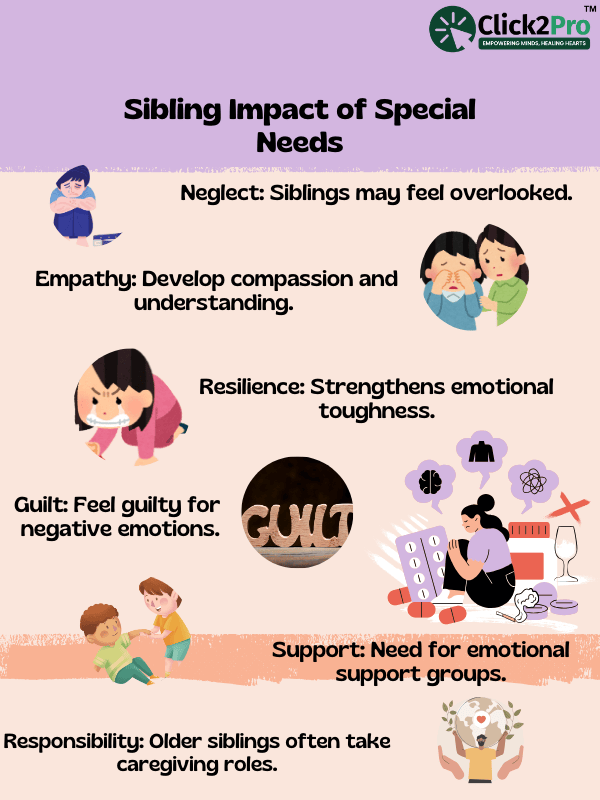
The impact of developmental delays on siblings is often an overlooked aspect of family life. Siblings can be profoundly affected by having a brother or sister with special needs, and the consequences can be both positive and negative.
Feelings of Neglect
Siblings may feel neglected as the majority of parental attention is often focused on the child with developmental delays. They may:
-
Experience Resentment: They might resent the attention given to their sibling, even though they understand the reasons.
-
Feel Overwhelmed: Older siblings, in particular, may take on caregiving roles, adding to their responsibilities.
Positive Effects
Despite the challenges, siblings often develop a deep sense of empathy and responsibility. They may become more compassionate and patient as they learn to navigate their sibling’s unique needs. However, it is essential to ensure siblings receive adequate attention and support to maintain their emotional well-being.
Support Systems and Coping Strategies for Families
The impact of developmental delays on family life necessitates comprehensive developmental disability support. Families need emotional, social, and practical support to navigate the challenges they face daily.
Professional Support
Families should seek professional support, such as:
-
Therapists and Counselors: Offering mental health support for both parents and siblings.
-
Developmental Therapists: Specializing in speech, motor, or cognitive development.
-
Support Groups: Connecting with other families experiencing similar challenges can provide emotional relief and practical advice.
Respite Care
Respite care provides caregivers with temporary relief, allowing them to rest and recharge. It can help prevent caregiver burnout and reduce stress within the family. Access to respite care is a critical element in managing the long-term emotional and social impact of developmental delays on families.
Government and Community Programs
Government initiatives and community-based programs play a vital role in supporting families dealing with developmental delays. These programs offer:
-
Educational Support: Schools with specialized education plans and trained staff can significantly help children reach their developmental milestones.
-
Financial Assistance: Some governments provide financial aid or subsidies for therapy and special education, reducing the financial burden on families.
Coping with the Future: Long-Term Considerations
As children with developmental delays grow, families must also plan for their long-term future. The emotional toll of planning for a child’s future independence or long-term care can be overwhelming.
Financial Planning
Financial planning is crucial for families to ensure they can provide the necessary long-term care. This may include:
-
Special Needs Trusts: Families may consider setting up trusts to ensure financial security for their child’s future.
-
Government Assistance Programs: Many countries offer assistance to families caring for individuals with developmental delays, including disability benefits.
Transition to Adulthood
As children with developmental delays reach adulthood, families face new challenges. Ensuring that children transition into adulthood with the appropriate support systems in place is essential for their well-being. This includes:
-
Vocational Training: Programs that help young adults with developmental delays find meaningful employment.
-
Independent Living Skills: Helping children develop skills to live independently can boost their self-esteem and quality of life.
Conclusion
The impact on family life when raising a child with developmental delays is both emotional and social. Families face a variety of challenges, including **mental health
struggles for caregivers**, social isolation, and the unique pressures that come with managing the needs of a child with developmental delays. However, with the right support systems—whether from healthcare professionals, community programs, or government assistance—families can better cope with these challenges and provide a nurturing environment for their children.
It’s essential for caregivers to prioritize their own mental health, seek support when needed, and involve siblings in a way that ensures they feel valued and supported. Developmental delays affect the entire family, but with awareness, planning, and a strong network of support, families can thrive despite these challenges.
As more families continue to face these developmental challenges, the societal stigma around disabilities needs to be addressed, and better support systems need to be made available to ensure that no family feels alone in this journey. Raising awareness, increasing empathy, and fostering inclusion for children with developmental delays and their families is a responsibility that belongs to all of us.
About the Author
Aakanchha Srivastava is a senior psychologist at Click2pro with extensive experience in developmental psychology and family counselling. With a deep understanding of the emotional and social challenges families face when raising children with developmental delays, Aakanchha has dedicated her career to providing compassionate support and evidence-based strategies to help families thrive. She specializes in working with caregivers, offering them tools to manage stress, and has a passion for helping siblings of children with special needs understand their unique family dynamics.
Aakanchha's expertise also extends to mental health counselling for individuals and families, focusing on creating balanced emotional well-being within the family unit. Through her work, she aims to spread awareness and provide valuable resources to help families navigate the challenges of developmental delays with resilience and hope.
FAQs
1.Can a child with developmental delays catch up?
Yes, with early intervention, many children with developmental delays can make significant progress and even catch up to their peers. The extent to which they catch up depends on the type of delay, its severity, and the effectiveness of the interventions. Therapies like speech, occupational, and behavioral therapy can help a child develop crucial skills.
2.What are the activities for developmental delay?
Activities that help children with developmental delays include sensory play, fine motor skill activities (like puzzles or building blocks), speech exercises (such as naming objects), and physical exercises to improve motor coordination. Tailored activities, based on the specific delay, can stimulate development and promote progress in key areas.
3.What are developmental delays in adults?
Developmental delays in adults often stem from childhood developmental disabilities that continue into adulthood. These can manifest as challenges in cognitive function, motor skills, or social interactions. Adults with developmental delays may require ongoing support, such as vocational training, independent living assistance, and therapeutic interventions.
4.Is developmental delay curable?
Developmental delay is not typically "curable" but with the right interventions, many individuals can learn to manage or overcome challenges associated with the delay. Early intervention and continuous support are key in helping children and adults develop essential skills and lead fulfilling lives.
5.Can developmental delays be normal?
Mild developmental delays can be normal and often resolve on their own with time, especially in areas like speech or motor skills. However, if the delay is significant or persistent, it’s important to seek professional evaluation to rule out underlying issues and start early intervention if necessary.
6.Is developmental delay a mental illness?
No, developmental delay is not considered a mental illness. It refers to a delay in reaching developmental milestones, which can be cognitive, physical, or social. Mental illnesses are separate conditions that affect mood, thinking, or behavior, although developmental delays can sometimes co-occur with mental health issues.
7.Is developmental delay neurological?
Yes, developmental delay can have neurological causes, such as brain injury, genetic disorders, or other neurological conditions that affect a child’s development. Early diagnosis and intervention are crucial in addressing neurological causes of developmental delays.