Table of Contents
- The Psychological Toll of Repeated Hurricane Exposure
- Community Resilience Amidst Recurring Disasters
- Effective Coping Strategies for Individuals and Families
- Mental Health Status of Agra and Similar Indian Cities
- Informational Chart: Post-Storm Anxiety Levels in Agra
- The Role of Teletherapy and Online Counselling
- Preventive Mental Health Measures and Government Resources
- Global Context: International Research and Insights
- FAQs
- Conclusion
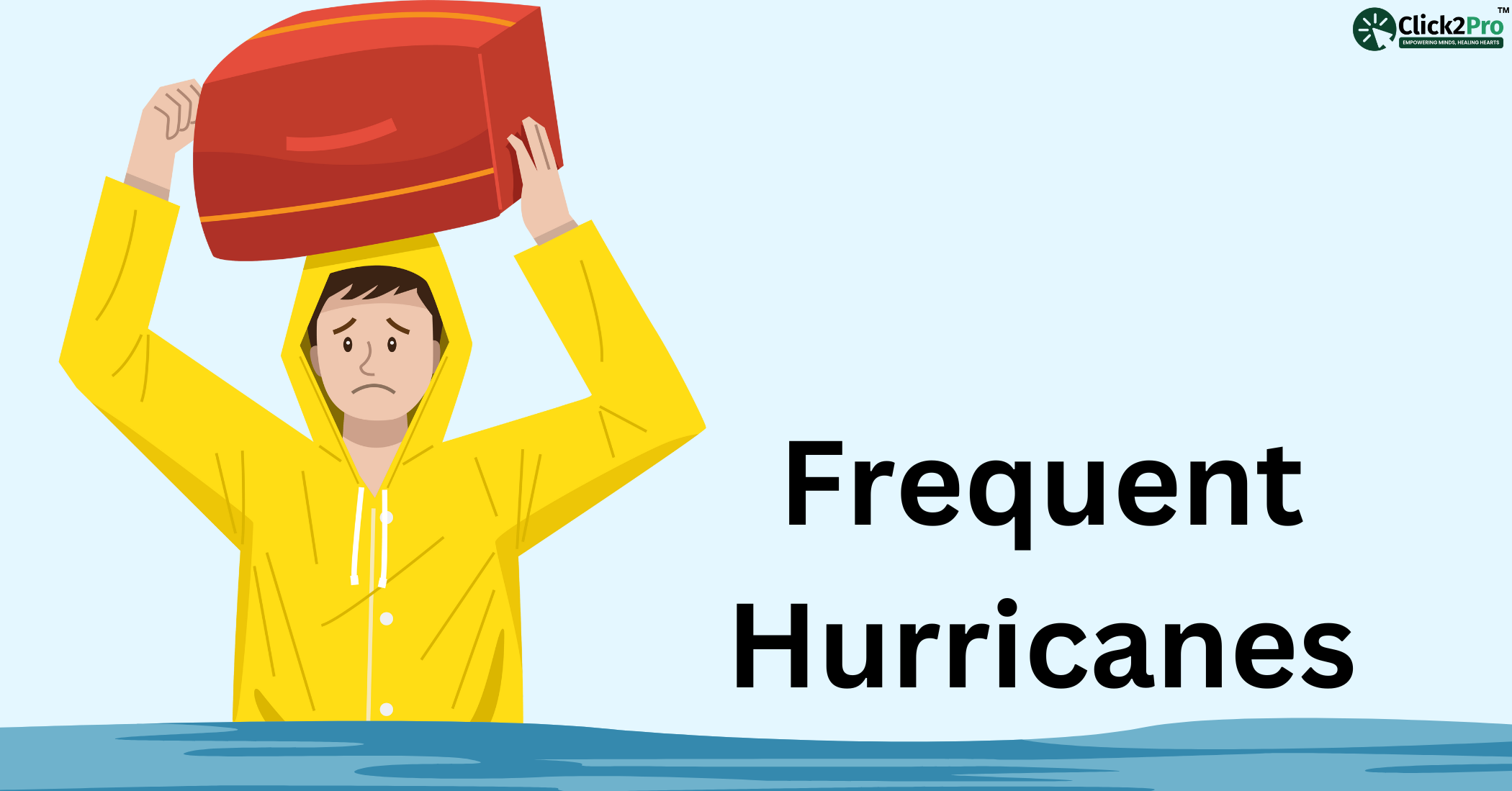
The frequency and intensity of hurricanes have surged dramatically in recent years due to climate change, leaving behind not only visible destruction but also profound psychological scars. The anticipation, experience, and aftermath of such disasters create a mental health crisis that affects millions. Frequent hurricanes disrupt daily lives, fuel anxiety, and test community resilience in ways that are often overlooked.
Research by the World Health Organization (WHO) indicates that individuals repeatedly exposed to natural disasters like hurricanes face a heightened risk of anxiety disorders, post-traumatic stress disorder (PTSD), and depression. For example, India’s coastal cities, such as Chennai and Mumbai, experience monsoons and cyclones regularly, resulting in immense emotional and psychological strain on their populations.
This blog delves into how hurricanes impact mental health, focusing on coping strategies, resilience-building, and the role of resources like Click2Pro’s counselling services in providing crucial mental health support.
Seeking help from an online psychologist can provide accessible and effective mental health support during and after hurricanes, ensuring individuals have the resources they need to build resilience.
The Psychological Toll of Repeated Hurricane Exposure
Immediate and Long-Term Impacts
|
Impact |
Symptoms |
|
Immediate |
Panic attacks, acute stress, sleeplessness, and hypervigilance. |
|
Long-Term |
PTSD, generalized anxiety disorder (GAD), depression, and emotional fatigue. |
Case Study: Post-Hurricane Katrina in the U.S., 49% of survivors reported symptoms of PTSD, with many experiencing chronic anxiety for years.
Anticipation Stress: Residents of hurricane-prone areas often live in fear during storm seasons, leading to heightened anxiety and difficulty concentrating on daily tasks.
Daily Life vs. Mental Health: A Comparison
|
Daily Life Before Hurricanes |
Daily Life After Hurricanes |
|
Routine activities, work-life balance |
Disrupted routines, financial losses, displacement, and stress. |
|
Stable mental health |
Persistent fear, hyper-awareness, and grief over losses. |
Community Resilience Amidst Recurring Disasters
The Role of Social Support
Communities hit by hurricanes repeatedly develop resilience through shared experiences and mutual aid. For example:
-
Neighborhood Support Systems: In hurricane-affected regions of Odisha, India, local groups mobilize to provide shelter, food, and emotional comfort during storms.
-
International Programs: The American Red Cross offers community-based mental health workshops to strengthen resilience.
Government and NGO Actions
-
Indian NDMA Initiatives: The National Disaster Management Authority (NDMA) conducts resilience-building programs focused on disaster preparedness.
-
NGO Contributions: Organizations like SEEDS India actively train communities to handle post-disaster trauma.
Causes of Frequent Hurricanes
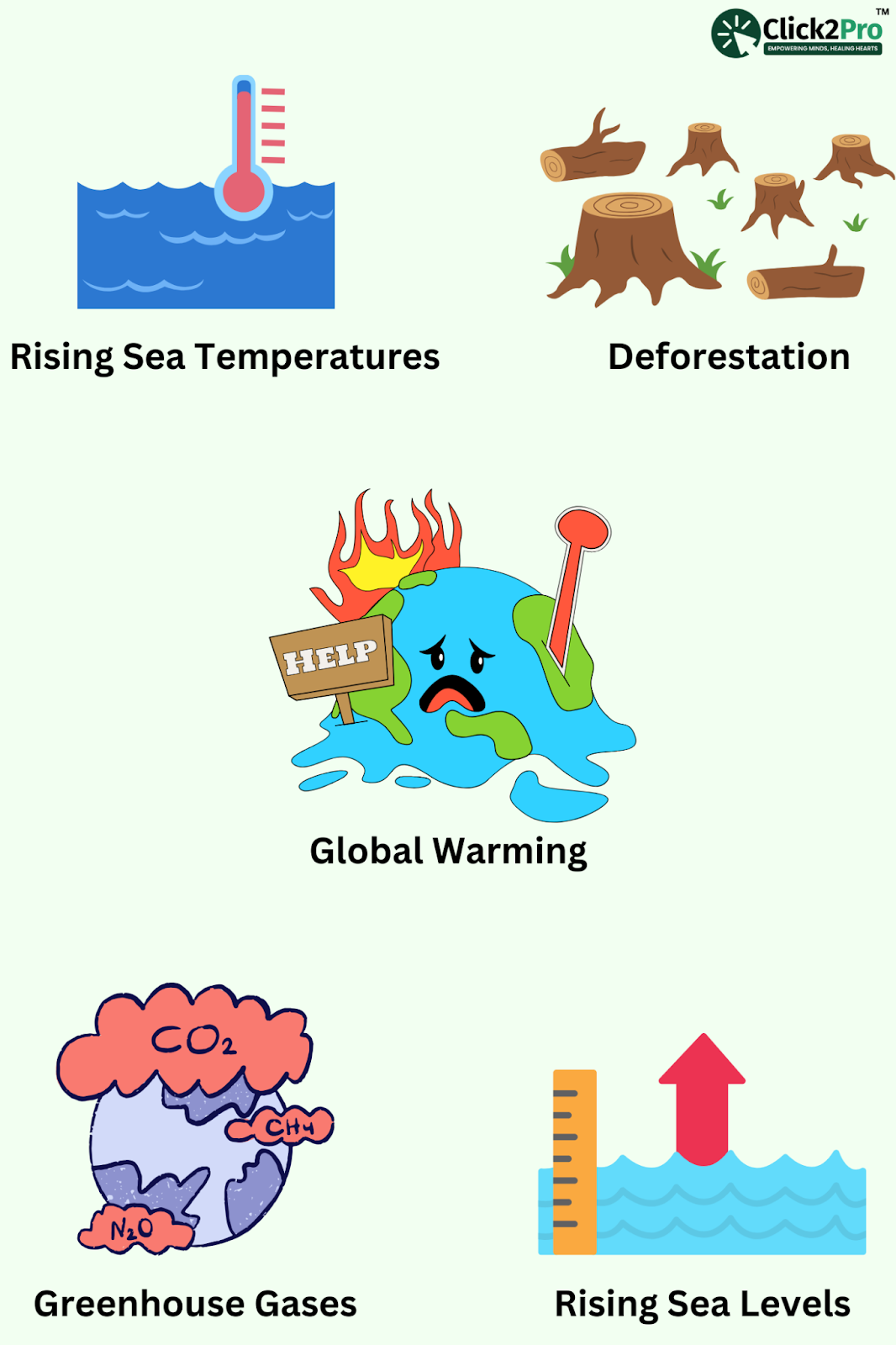
Frequent hurricanes are a result of complex natural and anthropogenic (human-induced) factors. Understanding these causes helps us predict and mitigate their devastating effects.
1. Climate Change and Global Warming
2. Atmospheric Conditions
3. Oceanic Phenomena
4. Rising Sea Levels
5. Human-Induced Environmental Changes
8. Anthropogenic Emissions
Impacts of Frequent Hurricanes
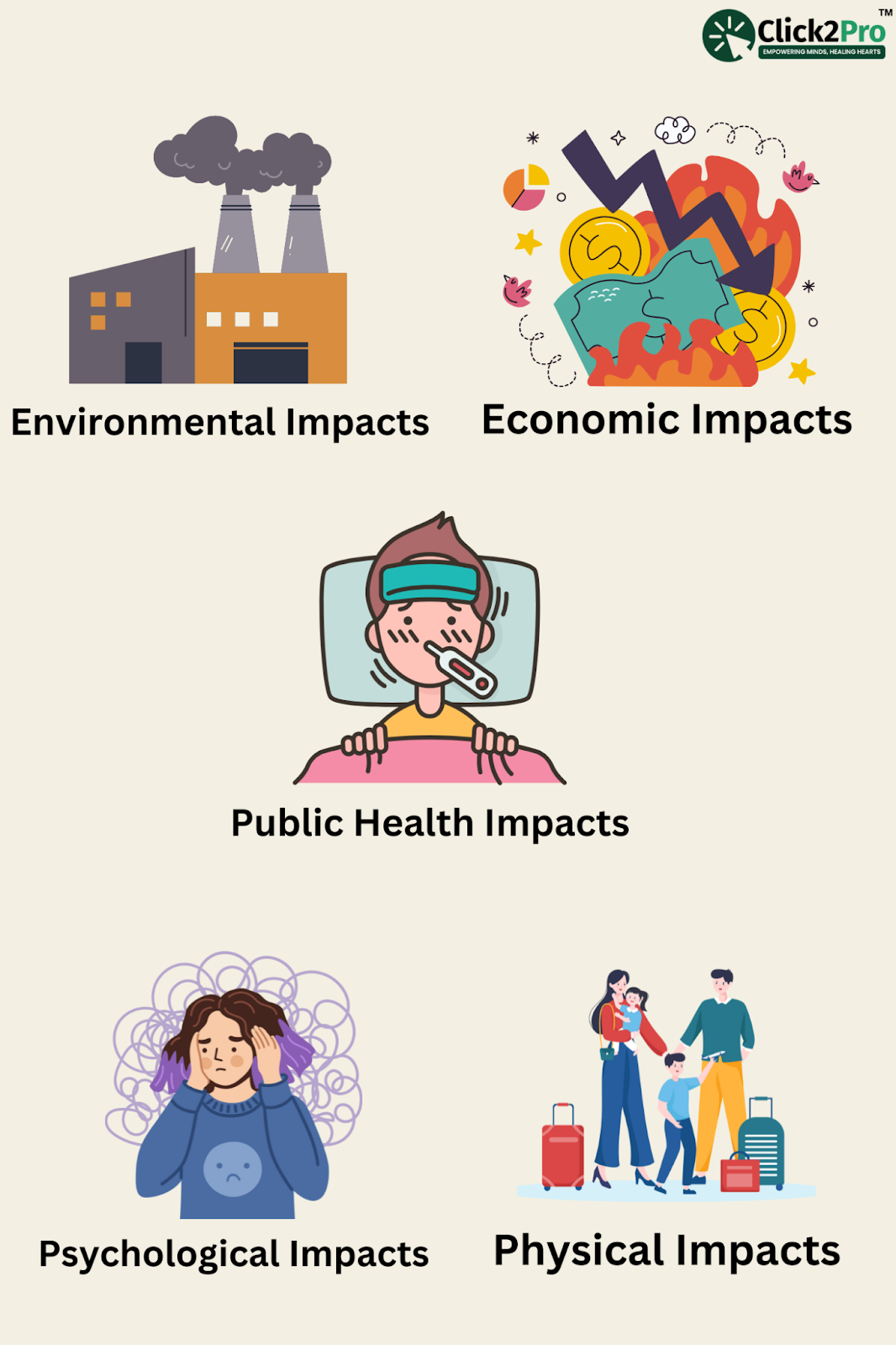
1. Physical Impacts - Frequent hurricanes destroy infrastructure, displace communities, and harm the environment.
2. Environmental Impacts - Frequent hurricanes harm the environment, causing deforestation, erosion, habitat loss, and pollution.
3. Economic Impacts - Frequent hurricanes harm economies through damage, disruptions, and recovery costs.
4. Psychological Impacts - Frequent hurricanes cause anxiety, PTSD, and long-term emotional distress.
5. Public Health Impacts - Frequent hurricanes harm public health through injuries, diseases, mental health issues, and disrupted healthcare access.
Effective Coping Strategies for Individuals and Families
Psychological Preparedness
-
Emergency Plans: Pre-arranged evacuation strategies reduce anxiety by instilling a sense of control.
-
Mindfulness Practices: Techniques like meditation and breathing exercises lower stress levels during crises.
Role of Counselling Services
-
Click2Pro provides teletherapy and online counselling tailored for disaster-affected individuals.
-
Case Study: A family in Agra relied on Click2Pro’s services after a severe storm disrupted their home and livelihoods, highlighting the platform’s accessibility and effectiveness.
-
If you’re seeking support to manage anxiety and stress caused by frequent hurricanes, searching for a trusted psychologist near me can connect you with experts like Click2Pro, who provide personalized counselling and teletherapy services.
Mental Health Status of Agra and Similar Indian Cities
Agra’s Mental Health Challenges
-
Agra faces irregular storms that lead to anxiety and stress, especially among vulnerable populations.
-
Government Data Insight: Uttar Pradesh's State Health Department reported a 20% increase in mental health cases after severe weather events in 2023.
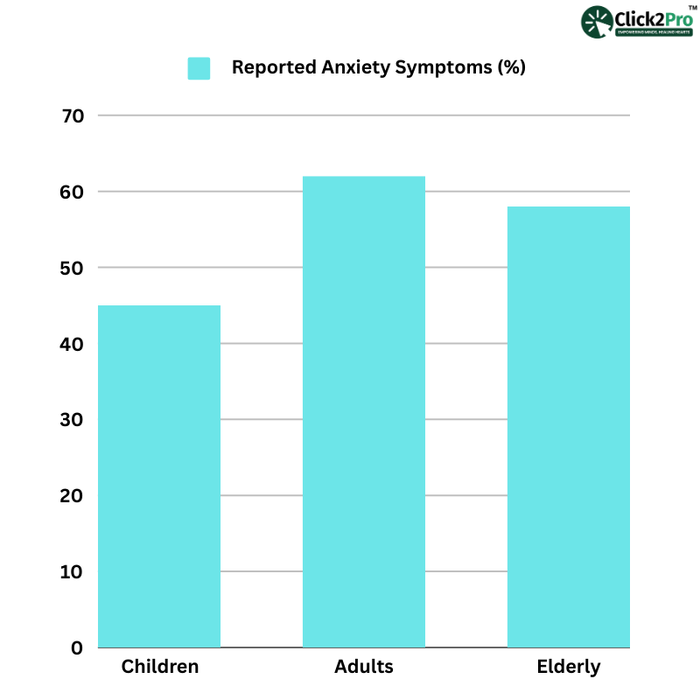
Informational Chart: Post-Storm Anxiety Levels in Agra
|
Population Group |
Reported Anxiety Symptoms (%) |
|
Children |
45% |
|
Adults |
62% |
|
Elderly |
58% |
The Role of Teletherapy and Online Counselling
Accessibility During Disasters
-
Teletherapy bridges the gap when local services are disrupted.
-
Example: During Cyclone Fani in 2019, Odisha residents used online platforms for mental health support.
Click2Pro’s Contribution
|
Service Feature |
Benefit |
|
Online Counselling |
Accessible from remote locations. |
|
Trauma-Focused Therapy |
Helps individuals process hurricane-induced trauma. |
|
Resilience Workshops |
Prepares individuals for future disasters mentally and emotionally. |
Preventive Mental Health Measures and Government Resources
Breaking the Anxiety Cycle
-
Long-term support programs: Resilience training and school-based interventions reduce recurring trauma.
Government Initiatives
-
NDMA Guidelines: Focus on integrating mental health into disaster preparedness frameworks.
-
Ayushman Bharat: Includes mental health services as part of comprehensive healthcare during disasters.
Global Context: International Research and Insights
International Reports
-
WHO Data: Nearly 20% of disaster survivors develop mental health disorders.
-
University Findings: A study by Harvard University links frequent hurricanes to chronic PTSD symptoms in 30% of survivors.
Research Theories
-
Resilience Theory by Dr. Martin Seligman: Explains how positive psychology fosters recovery after trauma.
-
Post-Traumatic Growth (PTG): Describes how individuals grow stronger after overcoming hurricane-related challenges.
FAQs
-
How do hurricanes affect mental health?
Frequent hurricanes cause anxiety, PTSD, and depression due to their unpredictable and devastating nature.
-
What are effective ways to cope with hurricane-related anxiety?
Mindfulness, emergency preparedness, and seeking professional help through services like Click2Pro.
-
How does teletherapy help during disasters?
Teletherapy ensures continuous mental health support when physical services are inaccessible.
-
What role does the government play in supporting mental health post-hurricane?
Governments fund disaster response programs and promote community resilience through initiatives like NDMA.
-
How do communities build resilience after hurricanes?
Social bonds, government support, and professional counselling services strengthen recovery efforts.
Conclusion
Frequent hurricanes create significant mental health challenges, but with proper support, individuals and communities can build resilience. Services like Click2Pro’s counselling and teletherapy provide essential support, offering immediate and long-term relief. By combining government initiatives, scientific insights, and innovative mental health solutions, we can empower communities to recover and rebuild stronger after each storm.