Table of Contents
- The Paradox of Loneliness in Close Relationships
- Key Signs of Emotional Distance in Relationships
- Causes of Emotional Loneliness in Relationships
- Bridging the Emotional Gap: Practical Strategies
- Impact of Emotional Distance on Mental Health and Relationship Stability
- When to Seek Help and Reevaluate the Relationship
- FAQs
- Conclusion
- About the Author
Relationships can bring immense joy and fulfillment, but the sense of isolation within a close connection can be confusing and painful. This emotional distance—a silent but potent gap between partners—can be as profound as physical separation, impacting mental health, relationship satisfaction, and personal well-being. Below, we explore the reasons behind this emotional loneliness, its signs, effects on mental health, and strategies to bridge this distance effectively. This blog is structured to address key points that fulfill user intent and provide unique insights, making it a comprehensive and user-centered guide.
For those facing emotional loneliness and relational challenges, counselling online in India offers a flexible way to connect with professionals and explore solutions together, even amidst busy schedules and personal commitments.
The Paradox of Loneliness in Close Relationships
Emotional loneliness in a relationship occurs when partners feel disconnected despite physical closeness. It can be hard to recognize because the relationship appears intact outwardly, with regular routines and mutual responsibilities. But, at its core, emotional loneliness stems from a lack of intimate connection, leaving individuals feeling misunderstood and unsupported. This experience is more common than it may seem, with many couples acknowledging that a loss of emotional support and understanding often fuels this distance.
Studies in social psychology emphasize that feeling emotionally close is foundational for relationship satisfaction and mental health. For instance, unresolved conflicts, attachment styles, and individual stressors contribute significantly to this type of loneliness. Recognizing these triggers can help partners understand why they may feel alone, even in each other’s presence.
Key Signs of Emotional Distance in Relationships
Emotional loneliness develops gradually, often going unnoticed until it becomes deeply ingrained. Key signs to watch for include:
Reduced Communication: A decline in meaningful conversations is one of the first signs. Partners may talk less about feelings and avoid discussing deeper topics that could foster understanding and closeness.
Decreased Affection: Withholding affection or reduced physical intimacy often accompanies emotional distance. This change can signify that emotional withdrawal is affecting the relationship.
Increased Conflict: Small disagreements can escalate when emotional distance exists, as unresolved issues from the past may resurface.
Lack of Interest in Shared Activities: When one or both partners lose interest in doing things together, it reflects the growing gap between them.
Recognizing these symptoms early and addressing them can prevent further isolation and encourage reconnection.
Causes of Emotional Loneliness in Relationships
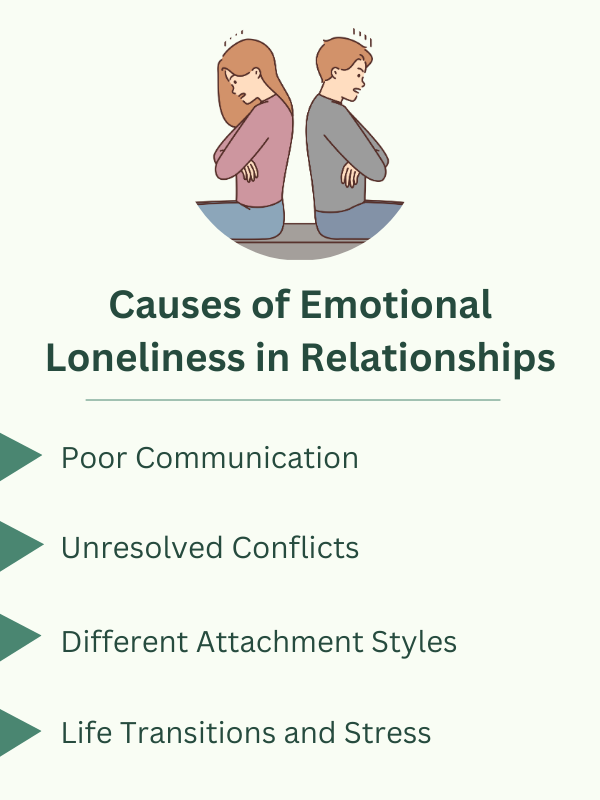
Various factors contribute to emotional loneliness, many of which involve stressors and personal challenges that go unaddressed within the relationship. Key causes include:
-
Life Transitions: Significant changes, like a new job, moving, or having a child, shift priorities and often reduce the time spent nurturing the relationship.
-
Stress and Individual Issues: Overwhelming personal issues, such as job stress or health concerns, can lead one or both partners to withdraw emotionally, unintentionally creating a gap.
-
Attachment Styles: A person’s attachment style (whether secure, anxious, or avoidant) influences how they bond emotionally. Individuals with avoidant attachment, for example, may shy away from closeness, making emotional intimacy challenging to maintain.
-
Unresolved Conflicts: Recurring arguments or unaddressed issues create resentment, preventing the openness and trust essential for emotional closeness.
Understanding these causes allows partners to empathize with each other’s experiences and take practical steps to bridge the gap.
Bridging the Emotional Gap: Practical Strategies
Repairing emotional distance is challenging but achievable. The process demands conscious effort, patience, and mutual commitment. Here are a few strategies that can help:
Intentional Communication: Make time to express feelings openly. Practice active listening and avoid judgment, as empathetic conversations can foster a sense of safety.
Shared Experiences: Engaging in shared activities builds connection. Taking a cooking class, going for walks, or simply spending time together without distractions can reinforce bonds.
Managing Individual Stress: Stress management is crucial. Practicing self-care and stress-reducing activities like meditation can make individuals more emotionally available.
Understanding Attachment Styles: Gaining insight into one’s own and a partner’s attachment style can help in understanding different approaches to emotional intimacy and in building a stronger foundation.
Couples who implement these practices often find themselves better equipped to address the emotional distance, creating a healthier and more connected relationship.
Impact of Emotional Distance on Mental Health and Relationship Stability
Emotional loneliness doesn’t only impact the relationship; it also affects individual mental health, leading to anxiety, depression, and decreased self-esteem. Studies indicate that persistent loneliness increases the risk of mental health issues, as well as dissatisfaction and resentment within relationships. If left unresolved, emotional isolation can escalate, potentially leading to relationship breakdown. Thus, it’s critical to recognize early signs of loneliness and address them through open communication and support.
When to Seek Help and Reevaluate the Relationship
If reconnecting on your own seems impossible or if emotional loneliness persists despite efforts to repair it, seeking professional support can be beneficial. Therapy provides a neutral space where partners can communicate openly and rebuild their connection. A therapist can help both partners navigate unresolved issues, identify the root causes of their emotional distance, and build healthier interaction patterns.
For some, persistent emotional loneliness may signal an incompatibility that can’t be overcome, despite their best efforts. If this is the case, having a respectful discussion about the relationship’s future can be beneficial for both partners.
FAQs
-
Why do I feel lonely in a relationship with someone I love?
Emotional loneliness in relationships often arises from unmet emotional needs, unresolved conflicts, or changes in personal priorities. While love forms the basis of connection, maintaining emotional closeness requires mutual effort, understanding, and continuous nurturing.
-
How can I reconnect emotionally with my partner?
Reconnection is possible through open communication, shared activities, and understanding each other’s emotional needs. Scheduling regular check-ins and fostering meaningful interactions help reestablish emotional intimacy.
-
Is emotional loneliness normal in long-term relationships?
It’s common for couples to experience moments of emotional distance, especially during stressful times. However, persistent loneliness should be addressed as it may indicate underlying relational issues.
-
What are the warning signs of emotional distance?
Key indicators include a lack of communication, reduced affection, avoidance of shared activities, and a general sense of detachment. Recognizing these signs early can help couples take steps to prevent further distance.
-
When should I seek professional help for emotional loneliness in my relationship?
If self-help strategies don’t work or if emotional loneliness continues to deepen, professional counselling can provide the tools needed to rebuild emotional bonds. A therapist can guide both partners through the process of reconnection.
Conclusion
Emotional loneliness in relationships is a complex experience, but understanding its causes, recognizing the signs, and taking proactive steps can help address this issue. By fostering open communication, prioritizing quality time, and embracing mutual support, couples can bridge the emotional gap and create a fulfilling, emotionally connected relationship.
About the Author
Sanjeevini S Dixit is a Senior Psychologist at Click2Pro with deep expertise in relationship psychology and emotional health. She brings years of experience to her work, offering compassionate, research-backed insights that address complex mental health topics. Her writing focuses on practical, culturally sensitive solutions, making mental health resources accessible to a wide audience, especially in India.