
Table of Contents
Pregnancy is a beautiful journey, but it can also bring stress and anxiety. As your body and life transform, it’s natural to feel overwhelmed. However, managing stress during pregnancy is essential for both your mental well-being and the health of your baby. In this blog, we will explore practical, easy-to-apply strategies to reduce stress during pregnancy, supported by expert insights, user experiences, and evidence-based practices.
Recognizing Stress: Why It Matters
Stress during pregnancy can stem from a variety of factors—changes in your body, expectations from family, or even concerns about childbirth. While occasional stress is normal, chronic stress may have consequences. Studies show that prolonged high-stress levels can contribute to premature birth or low birth weight .
Acknowledging stress early on is the first step in preventing it from becoming overwhelming. The good news? There are numerous ways to manage stress that are safe, simple, and effective, even in the most hectic times of pregnancy.
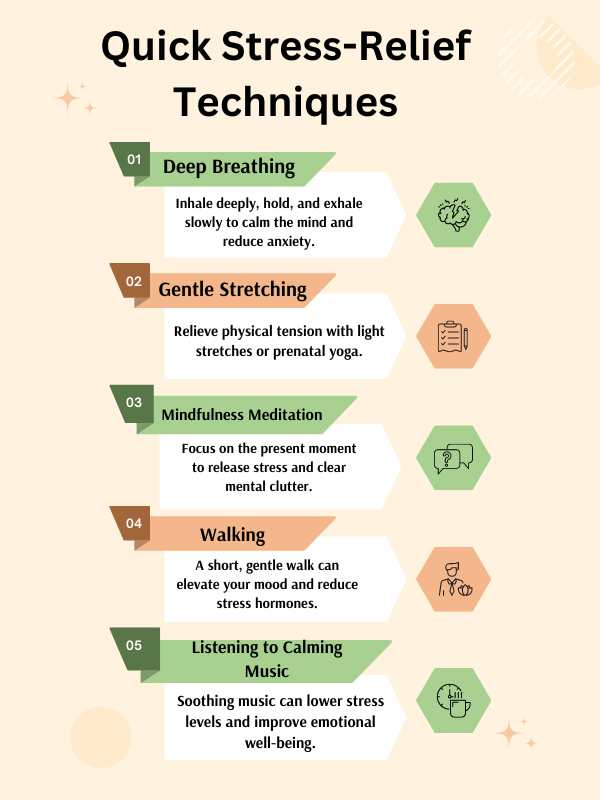
Quick Stress-Relief Techniques
When you’re in the moment and stress levels are high, having a few go-to techniques can make a world of difference.
Deep Breathing Exercises: Controlled breathing helps lower blood pressure and relaxes both your body and mind. Try inhaling for a count of four, holding for four, and exhaling for four. Repeating this simple pattern can calm immediate anxiety.
Gentle Movement: Walking or doing light prenatal yoga can work wonders in releasing tension. Moving your body not only helps reduce physical stress but also boosts your mood by releasing endorphins.
Mindfulness Meditation: Practicing mindfulness—even for a few minutes each day—can help you focus on the present moment and release worries about the future. Apps like Headspace or Calm provide guided meditations tailored for pregnant women.
Listen to Soothing Music: Research has shown that music therapy can reduce anxiety and improve emotional well-being during pregnancy . Create a playlist of calming songs that bring you peace.
Nutrition: Eating to Beat Stress
A balanced diet can significantly affect your stress levels during pregnancy. Foods rich in essential nutrients support your mental health by stabilizing mood swings and boosting energy levels.
-
Omega-3 Fatty Acids: Found in fish like salmon, chia seeds, and walnuts, omega-3s play a key role in regulating mood and lowering stress.
-
Magnesium-Rich Foods: Include spinach, almonds, and bananas in your diet to benefit from magnesium’s calming effects. Magnesium helps regulate cortisol, the stress hormone, and promotes muscle relaxation.
-
Hydration: Staying hydrated is crucial. Dehydration can lead to fatigue and headaches, exacerbating stress.
As you nourish your body with these stress-relieving foods, you'll also be supporting your baby’s healthy development.
Building a Support Network
Pregnancy can be isolating, especially when you're overwhelmed with emotions or unsolicited advice from family and friends. Surrounding yourself with a reliable support system can alleviate some of this stress. Having people to talk to—whether it’s your partner, a close friend, or a support group—can give you an outlet to express your feelings.
For expecting mothers who are unable to access in-person support, online therapy in India provides a convenient and effective solution to manage pregnancy-related stress from the comfort of home.
-
Talk to a Professional: If stress becomes too much to handle, talking to a psychologist or counselor can provide relief. Seeking therapy during pregnancy can help manage anxiety, reduce fears about childbirth, and give you practical tools to cope.
-
Prenatal Classes and Support Groups: Engaging with other expecting mothers through prenatal classes or support groups can reduce the feeling of isolation. You'll share experiences, and learn new ways to manage stress, and perhaps even gain friends for life.
Sleep: The Ultimate Stress-Buster
Sleep is one of the most crucial aspects of pregnancy health, but it’s also one of the hardest to manage. Poor sleep can make you irritable and increase anxiety. To improve sleep quality during pregnancy:
-
Create a Relaxing Sleep Routine: Turn off screens an hour before bed and engage in relaxing activities like reading, light stretching, or listening to calming music. Sticking to a bedtime routine trains your body to unwind.
-
Position Matters: As your pregnancy progresses, it’s recommended to sleep on your side, particularly the left side. This helps improve circulation to your baby and reduces the strain on your back and organs.
If you’re struggling with sleep despite your best efforts, consult your doctor to discuss safe options for improving sleep during pregnancy.
Dealing with External Stressors
External factors can also contribute significantly to stress during pregnancy. Here’s how to manage them effectively:
-
Handling Unwanted Advice: Pregnant women often receive unsolicited advice from family, friends, and even strangers. While the intentions may be good, it can often increase stress. Politely setting boundaries can help. Simply thank them for their concern, but trust your judgment and that of your healthcare professional.
-
Workplace Stress: Balancing work and pregnancy can be tough. If you're feeling overwhelmed, don’t hesitate to have a conversation with your employer about adjustments or additional support. Taking regular breaks, practicing deep breathing at your desk, and maintaining clear work-life boundaries can help manage work-related stress.
Holistic Approaches to Stress Reduction
In addition to daily practices, some holistic methods can complement your stress management efforts during pregnancy:
-
Prenatal Massage: A professional prenatal massage can help alleviate tension, especially in the back and shoulders, which often bear the brunt of pregnancy-related physical changes. It also promotes relaxation and better sleep.
-
Aromatherapy: Essential oils like lavender and chamomile have calming effects. Add a few drops to a diffuser or a warm bath to create a soothing atmosphere. Just ensure the oils are pregnancy-safe and used in moderation.
-
Acupuncture: Some women find acupuncture effective for reducing pregnancy-related anxiety and discomfort. Studies suggest that acupuncture may help in relieving stress, promoting relaxation, and improving mood .
FAQs
-
How can I reduce stress naturally during pregnancy?
Natural ways to reduce stress include practicing mindfulness, deep breathing exercises, and engaging in prenatal yoga. Maintaining a healthy diet and staying hydrated also contribute to lower stress levels.
-
Is stress during pregnancy harmful to the baby?
While occasional stress is normal, prolonged or severe stress can potentially impact fetal development. It's essential to manage stress effectively to ensure the health and well-being of both mother and baby.
-
Can stress cause miscarriage?
Although extreme chronic stress can pose risks, everyday stress is unlikely to cause a miscarriage. However, managing stress is still important for a healthy pregnancy.
-
What foods help reduce stress during pregnancy?
Foods like leafy greens, fish rich in Omega-3s, nuts, seeds, and magnesium-rich foods such as spinach and almonds can help reduce stress and promote mental well-being.
-
How does prenatal yoga help with stress?
Prenatal yoga combines gentle physical activity with breathing exercises, helping to reduce anxiety and tension. It improves circulation, eases aches, and prepares the body for childbirth.
Conclusion
Reducing stress during pregnancy isn’t about eliminating every source of anxiety but rather equipping yourself with tools to manage it. By incorporating simple practices like breathing exercises, healthy eating, and seeking support, you can create a calm and nurturing environment for both you and your baby.
Take each day as it comes, and remember that prioritizing your mental well-being is not just good for you—it's vital for your growing baby too. Whether through mindful practices, building a support system, or seeking professional guidance, there are many paths to a stress-free pregnancy.
By following these tips and listening to your body, you can ensure a smoother, more enjoyable journey into motherhood.
About the Author
Poornima Tripathi is a Senior Psychologist at Click2Pro, specializing in maternal mental health and stress management. With over a decade of experience, she is passionate about helping expecting mothers navigate the emotional challenges of pregnancy through mindfulness and evidence-based strategies. Poornima’s compassionate approach empowers women to prioritize their mental well-being for a healthier pregnancy journey.