Table of Contents
Schizophrenia is a complex and chronic mental health condition that affects the way a person thinks, feels, and behaves. One of the most important factors in understanding schizophrenia is recognizing the age at which it typically begins. While it can appear at any stage of life, there are specific age ranges during which the risk is higher. In this blog, we will explore the typical age of onset, variations across genders, rare cases of early and late-onset schizophrenia, and the factors that influence when schizophrenia may develop.
Typical Age Range for Schizophrenia Onset
Schizophrenia most commonly manifests between the late teens and early 30s. Research suggests that the peak onset period varies slightly between genders. For men, the most common age of onset is between 18 and 25 years old, while for women, it typically occurs between 25 and 35 years old. This difference can be attributed to various biological and hormonal factors, as well as differences in brain development between males and females.
Men often experience the onset of schizophrenia earlier, which can lead to more severe symptoms and challenges in treatment. In contrast, women tend to develop the condition later, and while the symptoms may be less severe initially, they are more prone to relapses throughout their lives. These age ranges provide important insights for early detection, which is crucial for effective management and improving outcomes.
Schizophrenia occurring after the age of 30 is less common, but it is not unheard of. It’s also worth noting that schizophrenia is rare in childhood and after the age of 50, although these cases do occur and present their own unique challenges.
Early-Onset Schizophrenia in Childhood and Adolescence
Schizophrenia in children, referred to as Childhood-Onset Schizophrenia (COS), is extremely rare, occurring in approximately 1 in 40,000 children. COS is typically diagnosed before the age of 13 and presents a particularly severe form of the disorder. Children with schizophrenia often experience hallucinations, delusions, and disorganized thinking, much like adults, but the impact on a child's development is profound. Early intervention is critical to helping these children manage their symptoms and integrate into daily life.
In adolescence, the onset of schizophrenia becomes more common. Teens who are at risk may display warning signs such as withdrawal from social activities, declining academic performance, and odd or irrational thinking. During adolescence, the brain is still developing, and this may explain why schizophrenia often emerges during this time, particularly for boys.
Late-Onset Schizophrenia: Beyond the Age of 40
Though rare, schizophrenia can develop later in life, even after the age of 40. This form of the condition is known as Late-Onset Schizophrenia, and it presents with some distinct characteristics compared to early-onset schizophrenia. People with late-onset schizophrenia often experience milder cognitive impairments but are more prone to symptoms like paranoia and delusions. Women are more likely than men to develop schizophrenia later in life, possibly due to hormonal changes associated with menopause.
Understanding the possibility of late-onset schizophrenia is crucial because it is often misdiagnosed as other age-related mental health conditions like dementia or depression. Early detection and appropriate treatment can significantly improve quality of life for individuals affected by late-onset schizophrenia.
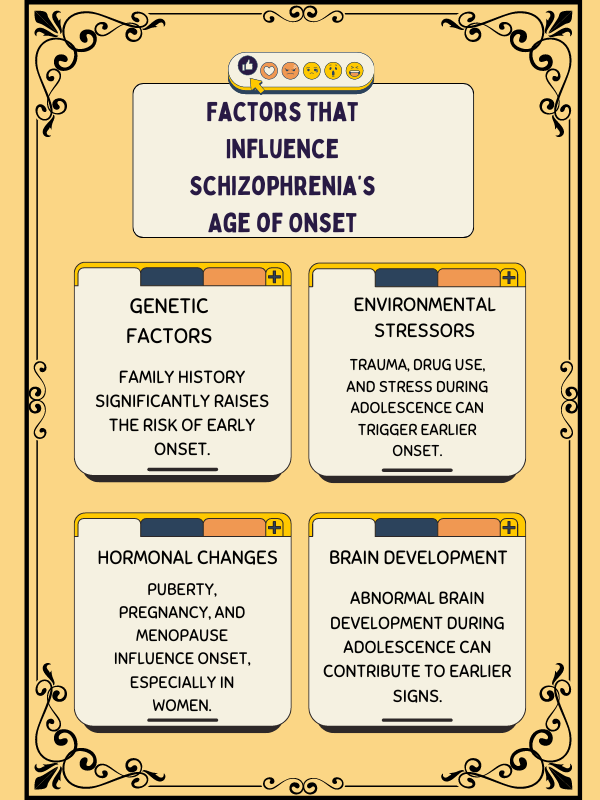
Factors That Influence Schizophrenia’s Age of Onset
While age is a critical factor in determining when schizophrenia may develop, other biological, genetic, and environmental factors play significant roles as well.
-
Genetics: Family history is a significant predictor of schizophrenia onset. Individuals with a close relative who has schizophrenia are at a much higher risk of developing the condition themselves. Genetic studies have identified several genes that may increase susceptibility to schizophrenia, though no single gene is responsible.
-
Environmental Stressors: Stressful life events, trauma, and drug use, particularly during adolescence, can trigger the onset of schizophrenia in those who are already genetically predisposed. Substance abuse, particularly of cannabis, has been linked to an earlier onset of schizophrenia in some individuals.
-
Hormonal Changes: Hormonal fluctuations during puberty, pregnancy, and menopause can also influence when schizophrenia develops. This is especially evident in women, who may experience their first symptoms during significant hormonal changes in their life, like pregnancy or menopause.
Early Detection: Recognizing Symptoms Based on Age
The earlier schizophrenia is detected and treated, the better the outcome for individuals living with the condition. Recognizing the symptoms based on age can help with early diagnosis:
-
In Teens: The warning signs often include social withdrawal, changes in personality, poor academic performance, and unusual thoughts or perceptions. These symptoms can be mistaken for normal teenage behavior, but when they persist, it's important to seek professional evaluation.
-
In Adults (20s-30s): Schizophrenia symptoms become more pronounced in early adulthood, with individuals often experiencing hallucinations, delusions, disorganized speech, and behavior. This period of life is also marked by significant stressors like starting a career or forming relationships, which can exacerbate symptoms.
-
In Middle Age (40+): Symptoms in late-onset schizophrenia tend to focus more on delusions and paranoia, with fewer cognitive deficits. Individuals might experience strong feelings of suspicion or believe that others are conspiring against them.
Conclusion
Schizophrenia is a lifelong condition that requires a combination of medical treatment, therapy, and strong support systems. Recognizing the typical age of onset and understanding how it manifests across different life stages can help families and caregivers provide the necessary support early on. Whether schizophrenia appears in adolescence, adulthood, or later in life, early intervention significantly improves the chances of managing symptoms and leading a fulfilling life.
If you're looking for the best psychologist in India online, services like Click2Pro offer access to top mental health professionals, ensuring quality care no matter where you are.
FAQs
1.At what age does schizophrenia typically start?
Schizophrenia commonly begins between the ages of 18 and 30, with men often developing symptoms earlier than women. However, it can manifest at any age, with rare cases in childhood and later adulthood.
2.Can schizophrenia develop later in life?
Yes, schizophrenia can develop after the age of 40, known as late-onset schizophrenia. While less common, it presents with milder cognitive symptoms but more paranoia and delusions, especially in women.
3.Can children get schizophrenia?
Although extremely rare, schizophrenia can occur in children, typically before the age of 13. Known as Childhood-Onset Schizophrenia (COS), it presents severe symptoms and requires early, intensive intervention.
4.Does the age of onset affect the severity of schizophrenia?
Yes, earlier onset often results in more severe symptoms and a more challenging course of treatment. Late-onset schizophrenia, by contrast, may involve fewer cognitive impairments but more paranoia.
5.What factors influence the age of schizophrenia onset?
Genetics, environmental factors (like stress or trauma), and hormonal changes all contribute to when schizophrenia may manifest. Family history and substance use, particularly during adolescence, can increase the risk.
About the Author
Mishika Sethi is a Senior Psychologist at Click2Pro, specializing in schizophrenia and other complex psychological disorders. With a compassionate, evidence-based approach, she helps individuals across all age groups through Cognitive Behavioral Therapy (CBT). Mishika is passionate about raising mental health awareness and regularly shares her insights through blogs to make mental health topics easier to understand and reduce stigma.