Table of Contents
Emotional abuse leaves scars that are often invisible but profoundly impactful. It corrodes self-esteem, instills self-doubt, and can leave individuals feeling trapped in cycles of shame and fear. While many suffer silently, it’s important to remember that healing is possible. Therapy for emotional abuse is a transformative process that not only helps individuals recover but also empowers them to reclaim their lives.
The Quiet Damage of Emotional Abuse
Unlike physical abuse, emotional abuse often lacks tangible signs, making it harder to recognize and validate. Victims frequently hear phrases like, “It’s all in your head,” or “You’re being too sensitive.” Over time, this diminishes their ability to trust their own feelings.
Studies from organizations like the American Psychological Association highlight how prolonged emotional abuse increases the risk of depression, anxiety, and even physical health issues like chronic fatigue. Emotional abuse isn’t limited to romantic relationships; it can occur within families, friendships, or workplaces.
The first step in healing is acknowledgment. Therapy offers a structured way to identify these patterns and begin the journey toward recovery.
How Therapy Helps in Healing Emotional Abuse
Therapy serves as both a mirror and a toolkit. It helps individuals reflect on their experiences and equips them with strategies to heal and rebuild.
Reclaiming Your Narrative
One of the core benefits of therapy is the opportunity to rewrite your story. Emotional abuse often leaves victims believing they are unworthy or flawed. Therapists use evidence-based techniques like Cognitive Behavioral Therapy (CBT) to challenge these distorted beliefs.
For instance, a client might explore questions like:
-
How did this belief originate?
-
What evidence supports or contradicts it?
Gradually, this process dismantles the negative self-talk perpetuated by abuse.
Rebuilding Emotional Independence
Therapists provide a safe space where clients can unlearn unhealthy attachment patterns. Techniques like mindfulness therapy focus on staying present, helping individuals manage triggers without being overwhelmed by past experiences.
Research published in the Journal of Interpersonal Violence found that survivors who engaged in trauma-focused therapy experienced a 70% improvement in emotional regulation and self-esteem.
If you're searching for the best psychologist in India online, platforms like Click2Pro connect you with experienced professionals who can help you navigate emotional challenges with ease.
A Step-by-Step Look at the Healing Process
Healing is not linear, but therapy provides a roadmap tailored to each individual’s needs.
Building a Foundation of Trust
Many victims of emotional abuse struggle with trust, even in therapy. The initial sessions often focus on creating a nonjudgmental environment where clients feel safe to share.
Identifying Patterns and Triggers
Therapists work collaboratively to identify patterns of abuse and recognize emotional triggers. For example, a client might realize that certain phrases or situations reignite feelings of worthlessness.
Learning Coping Mechanisms
Survivors often grapple with intense emotions like guilt, shame, or anger. Therapists teach practical techniques, such as grounding exercises or journaling, to manage these feelings in healthier ways.
Rebuilding Relationships
Therapy also focuses on building healthier relationships. This includes setting boundaries, recognizing red flags, and fostering connections rooted in mutual respect.
Transformative Changes Therapy Can Bring
Therapy doesn’t just mend the wounds of emotional abuse—it empowers individuals to thrive.
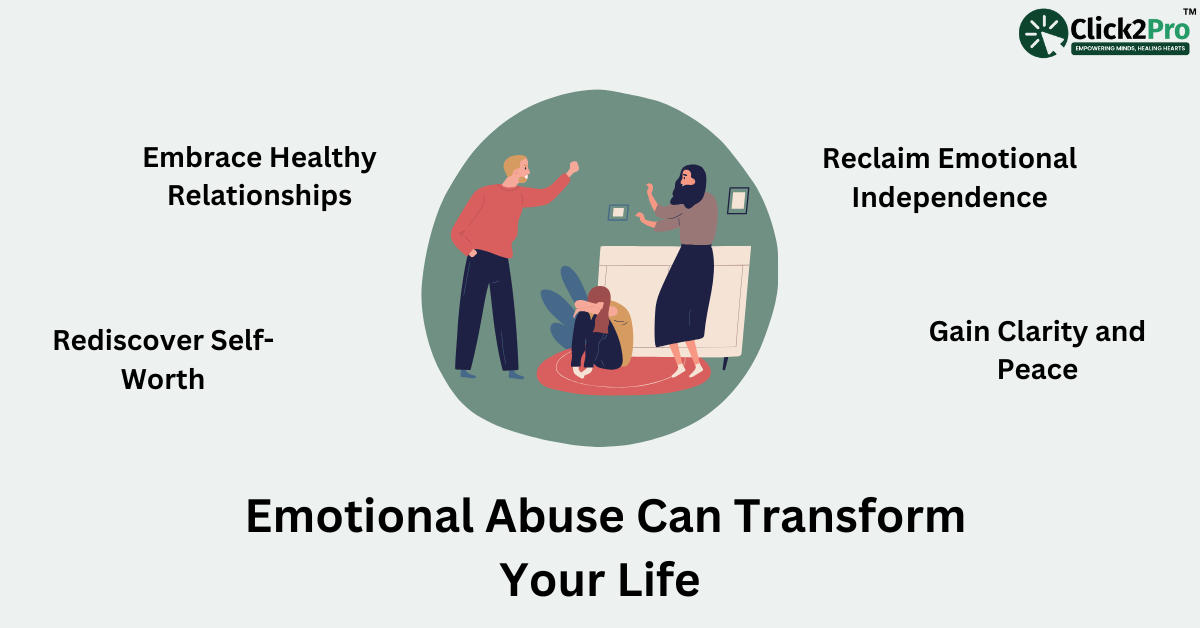
Rediscovering Self-Worth
One of the most profound changes therapy offers is the restoration of self-esteem. Survivors begin to see themselves through compassionate eyes, often for the first time in years.
Gaining Clarity and Control
Therapy equips individuals with the tools to detach from toxic influences and regain control over their lives. Whether it’s leaving an unhealthy relationship or asserting boundaries at work, clients learn to prioritize their well-being.
Resilience and Independence
Survivors become emotionally self-reliant, able to weather life’s challenges without falling into old patterns. As one client put it: “Therapy didn’t just heal me—it helped me become the person I always wanted to be.”
A Real-Life Success Story
Anjali, a 34-year-old marketing professional, sought therapy after ending a decade-long emotionally abusive relationship. She shared how therapy at Click2Pro changed her life:
“I didn’t realize how much I had internalized his voice until my therapist helped me differentiate his words from my own thoughts. Today, I can stand up for myself, and I’m in a healthier, happier relationship.”
Anjali’s story is one of many. Every survivor’s journey is unique, but the transformation is universal: a newfound sense of freedom, self-love, and strength.
Barriers to Seeking Help
Many people hesitate to seek therapy for emotional abuse due to stigma or practical concerns.
Overcoming Stigma
In many Indian households, emotional abuse is normalized or dismissed. Therapy challenges these cultural barriers, offering a safe space to break free from generational cycles of abuse.
Affordable and Accessible Options
Platforms like Click2Pro offer online counselling sessions, making therapy more accessible and cost-effective. For those unsure where to start, organizations like the Indian Association of Clinical Psychologists provide directories of certified therapists.
FAQs
1. How long does it take to heal from emotional abuse?
Healing is a personal journey and varies for each individual. While some may notice improvements in a few months, deeper recovery often takes years. The key is consistency and commitment to the process.
2. Can emotional abuse cause PTSD?
Yes, prolonged emotional abuse can lead to symptoms of PTSD, including flashbacks, hypervigilance, and emotional numbness. Trauma-focused therapy is especially effective in treating these symptoms.
3. Is therapy worth it for emotional abuse survivors?
Absolutely. Therapy not only helps survivors heal but also equips them with lifelong skills for resilience, emotional regulation, and healthier relationships.
4. How do I know if my therapist is right for me?
A good therapist will make you feel safe, heard, and respected. Look for professionals with experience in trauma or emotional abuse recovery.
5. Can therapy improve my relationships?
Yes. Therapy teaches survivors to set boundaries, communicate effectively, and build relationships based on trust and respect.
Start Your Healing Journey with Click2Pro
If you or someone you know is struggling with the effects of emotional abuse, remember that help is available. At Click2Pro, we specialize in personalized therapy solutions tailored to your unique needs. Begin your healing journey today and discover the transformative power of therapy.
Conclusion
Healing from emotional abuse is a deeply personal journey, but it’s one you don’t have to walk alone. Therapy provides a compassionate space to rediscover your voice, rebuild your self-esteem, and reclaim control over your life. While the scars of emotional abuse may linger, they do not define your future.
By seeking help and committing to the therapeutic process, you open the door to transformation—learning to set healthy boundaries, foster meaningful relationships, and embrace the resilient, confident person you are meant to be. At Click2Pro, we are here to guide and support you every step of the way. Remember, your healing is not only possible but well within reach. Take the first step today—you deserve it.
About the Author
Khushmeet Kaur is a Senior Psychologist at Click2Pro with extensive experience in trauma recovery and emotional abuse therapy. Known for her compassionate approach and expertise in evidence-based practices like CBT, she empowers individuals to rebuild self-worth and thrive. A passionate advocate for mental health, Khushmeet also contributes to workshops and blogs to make therapy accessible and relatable.