
Table of Contents
Avoidant personality disorder (AVPD) is a mental health condition that involves chronic feelings of inadequacy and extreme sensitivity to criticism. People with AVPD would like to interact with others, but they tend to avoid social interactions due to their intense fear of rejection.
AVPD is one of a group of conditions called “Cluster C” personality disorders. They involve anxiety and fear. Personality disorders are lasting patterns of behavior that are out of touch with cultural norms (how we’re expected to act) and develop in childhood or adolescence. They cause distress for the person with the condition and/or those around them.
Avoidant Personality Disorder (AvPD) is a profound mental health challenge, often characterized by an intense fear of rejection, chronic self-isolation, and avoidance of social interactions. For individuals struggling with AvPD, building relationships or even stepping into social settings can feel overwhelmingly intimidating. The good news is that Connection-Centered Therapy offers a lifeline, providing a structured and compassionate approach to overcoming these barriers.
This therapy emphasizes creating a safe space, fostering trust, and gradually exposing patients to positive social interactions. In a city like Siliguri, where interpersonal connections are integral to both personal and professional success, Connection-Centered Therapy can be a transformative solution, empowering individuals to rebuild their self-confidence, form meaningful relationships, and thrive in their social environments.
What’s the difference between avoidant personality disorder and social anxiety?
Avoidant personality disorder and social anxiety disorder (SAD) share similar features and behaviors. But they’re distinct conditions.
Social anxiety disorder (social phobia) happens when you have an intense and ongoing fear of being judged and watched by others. This leads people with SAD to avoid social situations.
People with AVPD also avoid social situations and relationships. But it has more to do with their low self-esteem than with anxiety. Anxiety is the core feature behind SAD, but it doesn’t have to be present with AVPD
Researchers once thought that AVPD was a severe form of SAD. But studies show that roughly two-thirds of people with AVPD don’t meet the standard diagnostic criteria for SAD according to the DSM-5.
But a person can have both AVPD and SAD. People with both conditions have more severe symptoms than those with just one.
How common is avoidant personality disorder?
Researchers estimate that about 1.5% to 2.5% of the U.S. population has avoidant personality disorder.
Who does avoidant personality disorder affect?
Avoidant personality disorder usually begins in your late teens or early 20s. AVPD is also more likely to affect people with any of the following mental health conditions:
-
Persistent depressive disorder.
-
Social anxiety disorder.
-
Anorexia nervosa.
Symptoms and Causes
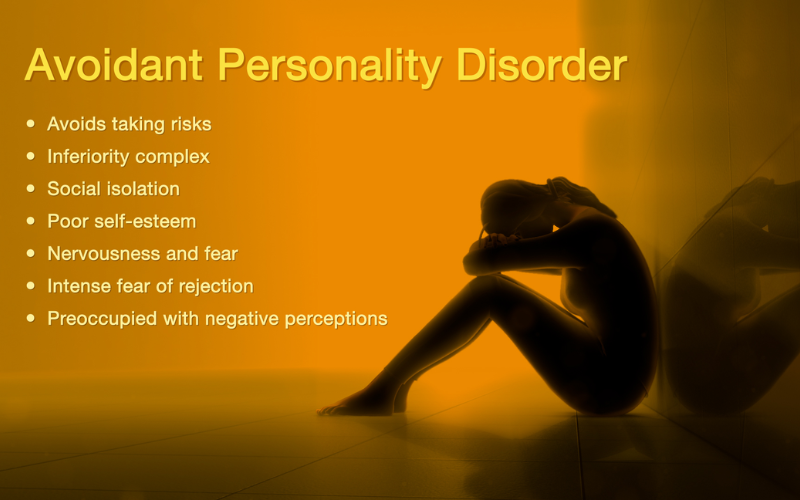
Avoidant personality disorder is a mental health condition that involves chronic feelings of inadequacy and extreme sensitivity to criticism.
What are the symptoms of avoidant personality disorder?
The main sign of avoidant personality disorder is having such a strong fear of rejection that you choose isolation over being around people. This pattern of behavior can vary from mild to extreme.
Other signs and behaviors of avoidant personality disorder include:
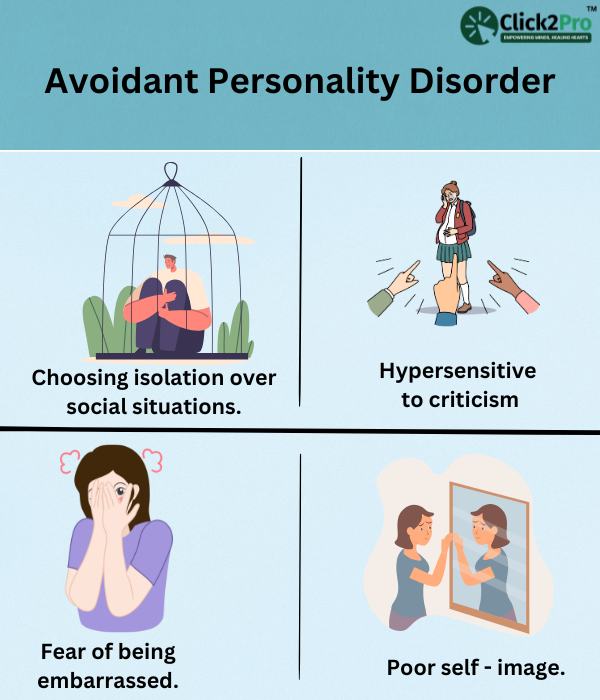
Having a poor self-image, seeing themselves as inadequate and inferior.
Being overly concerned about criticism or disapproval.
May be reluctant to become involved with others unless they know for sure that others will like them.
Experiencing extreme anxiety (nervousness) and fear in social settings and relationships. This may lead them to avoid activities or jobs that involve being with others.
Being shy and self-conscious in social situations due to a fear of doing something wrong or feeling embarrassed.
Tending to exaggerate potential problems or misinterpret feedback as negative.
Seldom trying anything new or taking chances.
Diagnosis and Tests
How is avoidant personality disorder diagnosed?
Personality continues to evolve throughout child and adolescent development. Because of this, healthcare providers don’t typically diagnose someone with avoidant personality disorder until after the age of 18. Providers need evidence that these patterns of behavior are enduring and inflexible and don’t fade with time.
Personality disorders, including avoidant personality disorder, can be difficult to diagnose. This is because most people with one don’t think there’s a problem with their behavior or way of thinking.
When they do seek help, it’s often due to conditions such as anxiety or depression from the problems created by their personality disorder, like isolation or a lack of friends.
When a mental health Services in Siliguri professional, such as a psychologist or psychiatrist, suspects someone might have avoidant personality disorder, they often ask broad, general questions that won’t create an environment that the person might think of as critical or embarrassing. They ask questions that will shed light on:
-
Past history.
-
Relationships.
-
Previous work history.
-
Reality testing.
A person suspected of having avoidant personality disorder may lack insight into their behaviors and thought patterns. So, mental health professionals often work with the person’s family and friends to collect more information about their behaviors and history.
Mental health providers base a diagnosis of avoidant personality disorder on the criteria for the condition in the American Psychiatric Association’s Diagnostic and Statistical Manual of Mental Disorders (DSM-5).
Diagnostic criteria for avoidant personality disorder involve a persistent pattern of at least four of the following behaviors:
Avoiding job-related activities that involve working with others because they fear others will criticize or reject them.
Being unwilling to get involved with others unless they’re sure others will like them.
Being passive or reserved in close relationships because they fear ridicule or humiliation.
Extreme worry about others criticizing or rejecting them in regular social situations.
Feeling self-conscious in new social situations because they feel inadequate.
Assessing themselves as socially unskilled, unappealing or inferior to others.
Being reluctant to take personal risks or try new activities because they may feel embarrassed.
Management and Treatment
What is the treatment for avoidant personality disorder?
Treating personality disorders is difficult because people with these conditions have deep-rooted patterns of thinking and behavior that have existed for many years.
However, people with avoidant personality disorder tend to be good candidates for treatment because the condition causes them significant distress. And most people with AVPD want to develop relationships. This desire can be a motivating factor for people with AVPD to follow their treatment plans, which will likely include psychotherapy and, potentially.
Treatment for people with this condition is most effective when family members are involved and supportive.
Psychotherapy for AVPD
Psychotherapy (talk therapy) is the treatment of choice for personality disorders. The goal of treatment is to help you uncover the motivations and fears associated with your thoughts and behavior. In addition, you can learn to relate to others more positively.
Two specific types of psychotherapy that can help people with AVPD include:
Psychodynamic therapy: This type of therapy focuses on the psychological roots of emotional suffering. Through self-reflection, you look into problematic relationships and behavior patterns in your life. This helps you better understand yourself. It can help you change how you relate to other people and your environment.
Cognitive behavioral therapy (CBT): This is a structured, goal-oriented type of therapy. A therapist or psychologist helps you take a close look at your thoughts and emotions. You’ll come to understand how your thoughts affect your actions. Through CBT, you can unlearn negative thoughts and behaviors. You’ll learn to adopt healthier thinking patterns and habits. It may especially focus on developing social skills.
What Is Connection-Centered Therapy?
Connection-Centered Therapy is a therapeutic approach that focuses on building trust and fostering safe, supportive connections to help individuals with AvPD overcome their fears and gradually engage with the world around them.
Core Principles:
Trust-Building: Establishing a non-judgmental environment where patients feel safe expressing their fears.
Gradual Exposure: Encouraging patients to confront social situations step by step.
Social Rewiring: Teaching patients to interpret social cues accurately and respond with confidence.
Mental Health Resources in Siliguri
-
City’s Mental Health Status:
Limited access to specialized therapy services has created challenges for mental health care in Siliguri.
Local Government Initiatives:
-
The National Mental Health Program (NMHP) promotes mental health awareness.
-
Local NGOs like Anubhav Welfare Society offer Online counselling services.
-
Collaboration with platforms like Click2Pro bridges the gap between mental health needs and access.
How Connection-Centered Therapy Works
-
Key Techniques:
Safe Space Creation: Therapists foster a non-judgmental environment.
Role-Playing Exercises: Patients practice social interactions in controlled settings.
Mindfulness Training: Techniques to manage anxiety during interactions.
Empathy Development: Understanding and interpreting social cues better.
|
Technique |
Purpose |
Example Practice |
|
Safe Space Creation |
Build trust |
Open discussions in therapy |
|
Role-Playing Exercises |
Gradual exposure to social settings |
Simulated workplace chats |
|
Mindfulness Training |
Reduce anxiety during social interactions |
Breathing techniques |
|
Empathy Development |
Improve relational understanding |
Social cue analysis |
The Impact of Connection-Centered Therapy
Real-Life Success in Siliguri:
Example: Anjali (name changed) overcame her fear of social gatherings and now attends community events at Salugara Park.
National Context:
Across India, therapy centers like Click2Pro have empowered hundreds of individuals with AvPD to regain confidence and improve their quality of life.
International Comparisons:
Studies by the American Psychological Association (APA) highlight the global success of Connection Centered Therapy, showing an 85% improvement rate in patients over 12 months.
Science and Research Supporting the Approach
The Role of Oxytocin:
Known as the "bonding hormone," oxytocin increases during positive social interactions, reducing anxiety.
Carl Rogers' Humanistic Theory:
Emphasizes the importance of a non-judgmental environment for personal growth.
Bandura’s Social Learning Theory:
Demonstrates how gradual exposure to social scenarios can reshape behavioral patterns.
How This Therapy Benefits AvPD Patients
Self-Esteem Growth: Patients experience confidence through successful interactions.
Fear Reduction: Gradual exposure lessens the intensity of rejection anxiety.
Stronger Relationships: Skills learned in therapy translate to real world success.
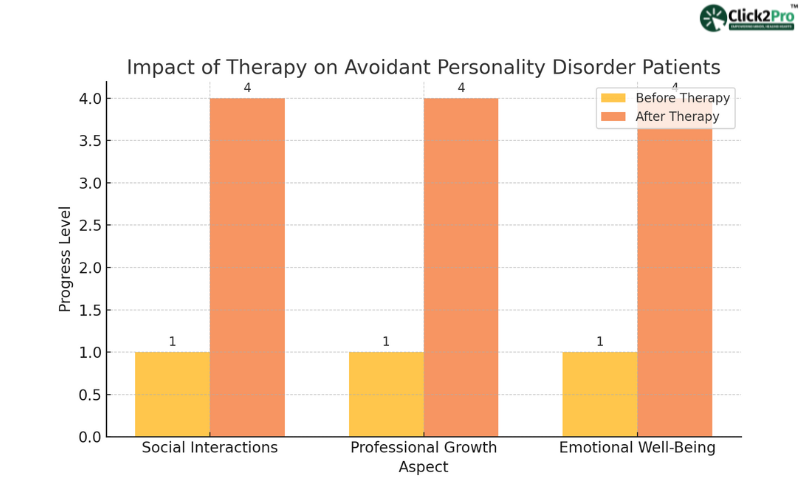
Comparing Daily Life Before and After Therapy
|
Aspect |
Before Therapy |
After Therapy |
|
Social Interactions |
Avoidant, fearful |
Confident, gradual engagement |
|
Professional Growth |
Stagnant |
Active participation |
|
Emotional Well-Being |
Isolated, anxious |
Connected, fulfilled |
Government and NGO Roles
-
Indian Government Data:
The NMHP provides subsidized mental health support, with special focus on underserved regions like Siliguri.
-
NGO Contributions:
Partnerships with Click2Pro help individuals access therapies like Connection-Centered Therapy.
FAQs
1.What is Avoidant Personality Disorder (AvPD)?
A condition characterized by extreme fear of rejection and self-isolation.
2.How does Connection-Centered Therapy help?
By fostering trust, reducing fear, and teaching relational skills.
3.Is this therapy available online?
Yes, Click2Pro offers online therapy sessions for AvPD patients.
4.How long does the therapy take?
Significant improvements are typically seen within 6–12 months.
Conclusion
Connection-Centered Therapy is a powerful tool for individuals with Avoidant Personality Disorder, particularly in cities like Siliguri, where connection plays a pivotal role in personal and professional success. By offering trust, gradual exposure, and scientifically backed techniques, this therapy empowers patients to reclaim their lives and thrive socially and emotionally.
For those ready to take the first step, platforms like Click2Pro provide accessible, compassionate care to transform lives.