Table of Contents
Stress is an unavoidable part of high-pressure careers, particularly in industries like healthcare, finance, technology, and law. The relentless demands of deadlines, performance pressures, and tight schedules can create a cycle of chronic stress, significantly affecting both mental and physical health.
In Ajmer, a growing hub for professionals in various sectors, the mental health landscape reflects a global challenge. According to the World Health Organization (WHO), workplace stress contributes to 20% of global mental health disorders. A National Mental Health Survey (NIMHANS) highlights that over 15% of Indian professionals report symptoms of anxiety and depression caused by workplace stress.
However, with the right strategies—ranging from mindfulness practices to structured professional support—you can effectively manage workplace stress and achieve a balance that supports productivity and well-being. This blog explores practical steps, government initiatives, scientific research, and expert tips tailored for Indian professionals, emphasizing actionable solutions like those provided by CLICK2PRO.
Why Are High-Pressure Careers So Stressful?
Key Triggers in High-Pressure Jobs
-
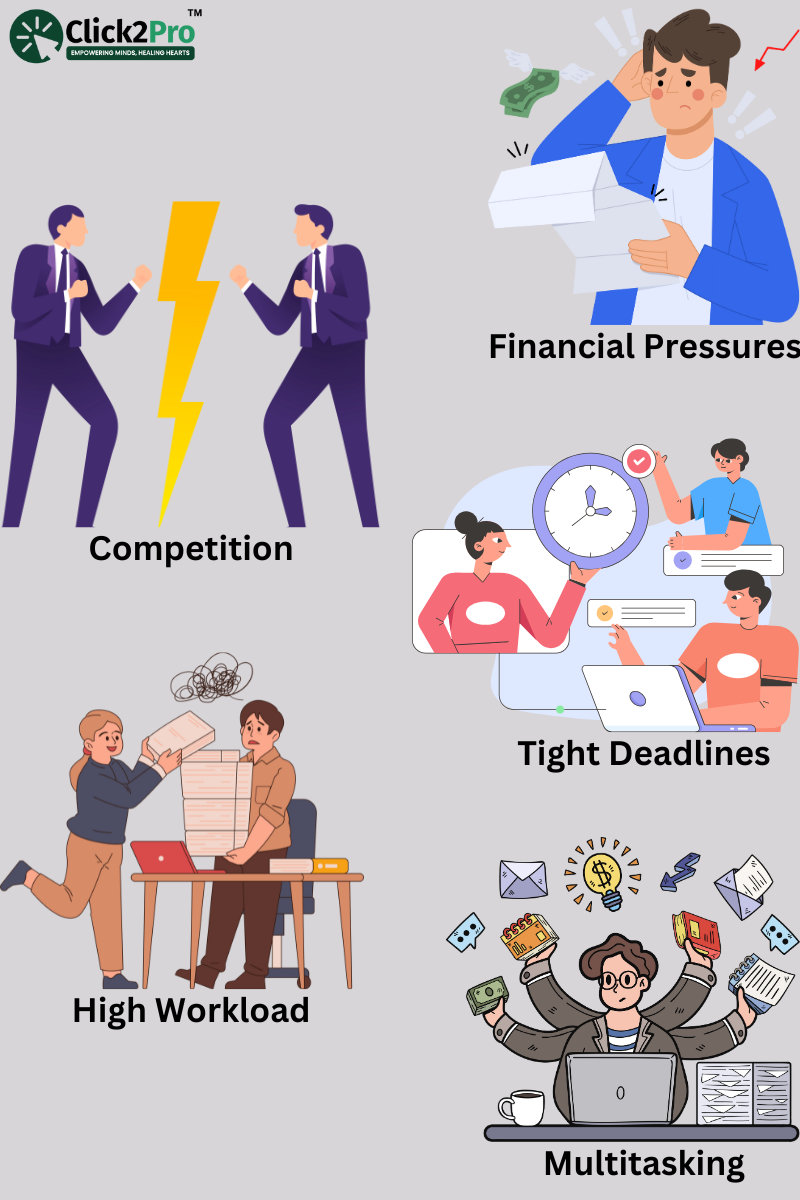
Long Hours: Industries like tech and healthcare demand extended working hours, leaving little room for personal recovery.
-
High Stakes: Professionals in finance and law often deal with decisions that can have life-altering consequences.
-
Multitasking: Constant juggling of multiple priorities increases cognitive load and mental fatigue.
-
Intense Competition: Peer pressure and the race for promotions add to stress.
Ajmer-Specific Insights
Ajmer professionals face unique stressors such as:
-
Limited local resources for workplace mental health.
-
A fast-paced work culture juxtaposed with traditional family responsibilities.
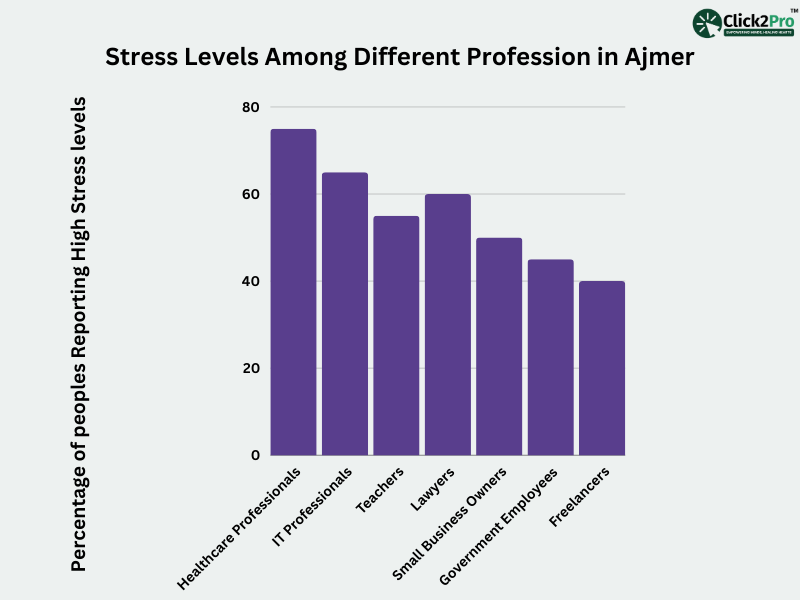
The chart above illustrates the stress levels among different professions in Ajmer:
-
Healthcare Professionals report the highest stress levels (70%), reflecting the demanding nature of their work.
-
IT Professionals follow closely at 65%, likely due to long hours and tight deadlines.
-
Teachers face stress levels of 55%, often attributed to workload and administrative tasks.
-
Lawyers report 60% stress, driven by high-stakes cases and deadlines.
-
Small Business Owners experience 50% stress due to financial pressures and market competition.
-
Government Employees report 45%, often linked to bureaucratic pressures.
-
Freelancers, though flexible, still face 40% stress levels, largely from inconsistent income.
Comparison With Global Trends
-
While Ajmer professionals struggle with balancing traditional expectations and modern workloads, cities like Bengaluru or Delhi experience more tech-centric stress.
-
Globally, studies by the American Psychological Association (APA) show a similar trend, highlighting chronic stress as a leading cause of burnout in high-pressure careers.
The Mental Health Status in Ajmer and India
Ajmer's Mental Health Landscape
-
Statistics: According to a study by the Indian Council of Medical Research (ICMR), 20% of Ajmer's working population reports workplace stress.
-
Service Gap: There is limited access to affordable mental health professionals, but platforms like CLICK2PRO bridge this gap with accessible online counselling.
-
Global Trends: A Gallup report indicates that 54% of women and 47% of men experience workplace stress.
-
Burnout Rates: Research shows that 34% of women report feeling burned out "always" or "very often," compared to 26% of men.
National Trends
-
India ranks among the top 10 countries for workplace stress globally (WHO Report 2021).
-
Major causes: Long hours, cultural taboos around mental health, and lack of employer-supported mental wellness programs.
Government Resources and NGO Actions
Government Initiatives
-
Ayushman Bharat: Provides mental health coverage under its health schemes.
-
District Mental Health Program (DMHP): Offers mental health services in rural and semi-urban areas like Ajmer.
-
Kiran Helpline: A 24/7 government-backed helpline for mental health support.
NGOs Making a Difference
-
Sangath and The Live Love Laugh Foundation actively work in India to destigmatize workplace mental health issues.
-
Ajmer-specific initiatives by local NGOs include stress management workshops and employee wellness programs.
The Impact of Chronic Stress
Mental Health Consequences
-
Increased risk of anxiety disorders, depression, and burnout.
-
Over 30% of Indian professionals report feelings of emotional exhaustion (NIMHANS).
Physical Health Risks
-
Chronic stress has been linked to hypertension, heart disease, and weakened immunity, as shown by studies from Harvard Medical School.
City Context
Ajmer professionals often experience physical symptoms like sleep disturbances and migraines, especially in high-demand industries like healthcare.
Recognizing the Warning Signs
-
Emotional: Mood swings, irritability, lack of motivation.
-
Physical: Persistent headaches, fatigue, digestive issues.
-
Behavioral: Increased absenteeism, procrastination, substance reliance.
Strategies to Manage Stress in High-Pressure Careers
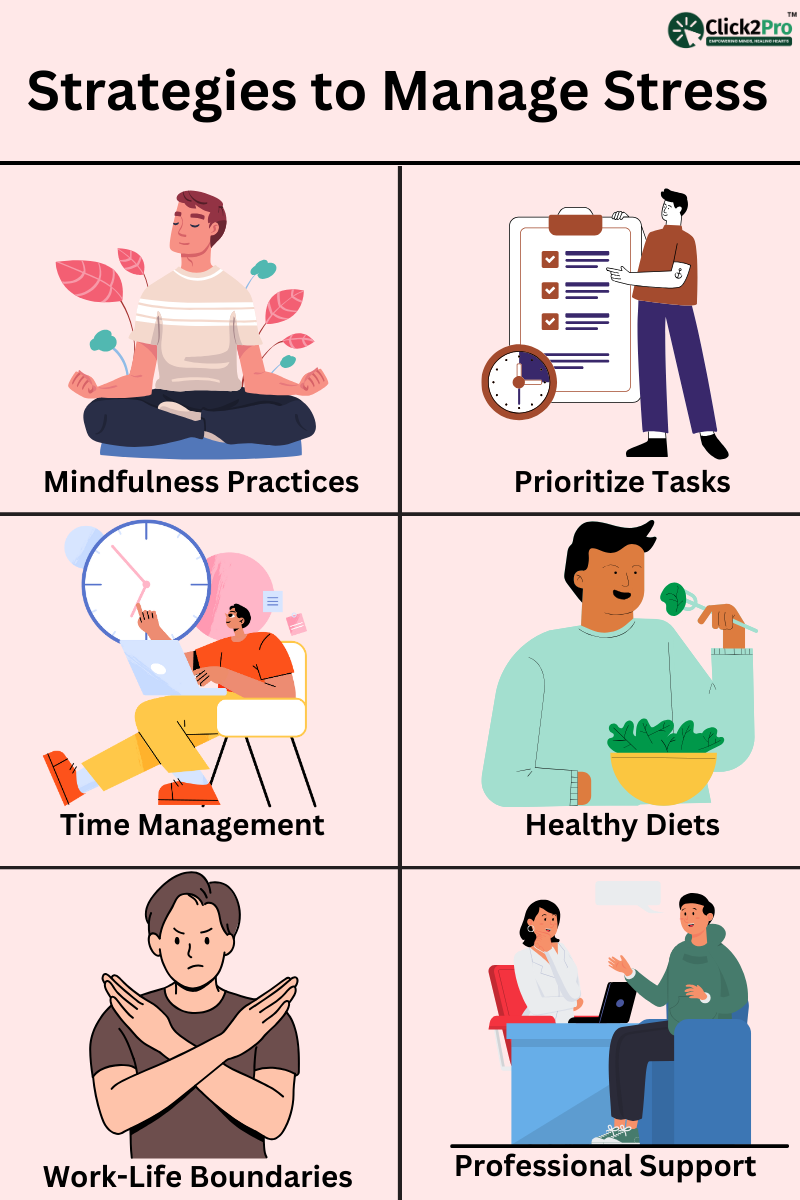
Prioritize Tasks
-
Frameworks: Eisenhower Matrix to distinguish urgent from important tasks.
-
Practical Tools: Productivity apps like Trello or Asana.
Incorporate Mindfulness
-
Regular yoga and meditation sessions.
-
Apps like Calm and Headspace for guided mindfulness practices.
Build a Resilient Lifestyle
-
30 minutes of daily exercise.
-
Balanced nutrition focusing on whole grains and omega-3-rich foods.
Utilize Professional Support
-
Local psychologists and services like CLICK2PRO offer tailored counselling.
-
Case study: Ajmer healthcare professionals managing burnout through therapy.
If you're looking for a trusted psychologist in Ajmer, CLICK2PRO offers tailored mental health solutions to help professionals manage stress effectively.
Insights From Research and Psychology
Scientific Research
-
Hans Selye’s General Adaptation Syndrome: Explains the body’s response to prolonged stress.
-
Studies from NIMHANS reveal how Cognitive Behavioral Therapy (CBT) effectively reduces workplace anxiety.
Global Insights
-
WHO’s Guidelines: Workplace mental health initiatives reduce stress by up to 30%.
Comparison: Daily Life and Mental Health
Lifestyle Impacts
-
Lack of boundaries between work and personal life exacerbates stress in Ajmer’s traditional households.
-
Nationally, urban professionals report higher stress levels than their rural counterparts.
Graphical Representation
-
Stress prevalence by industry: IT (40%), Healthcare (35%), Finance (30%).
Role of CLICK2PRO in Stress Management
-
Services in Ajmer:
Online counselling tailored for high-pressure careers.
Stress management programs for professionals.
-
National Outreach:
Support for working professionals across India with accessible, affordable mental health services.
Preventing Burnout
-
Early Interventions: Recognize signs like chronic fatigue or disengagement.
-
Actionable Tips:
-
Regular breaks during work hours.
-
Hobbies like art, music, or gardening.
FAQs
-
What causes stress in high-pressure careers?
Long hours, performance pressure, and lack of work-life balance are primary causes.
-
How can I manage workplace stress effectively?
Mindfulness, time management, and professional counselling are key strategies.
-
What services does CLICK2PRO offer in Ajmer?
Online counselling, stress management programs, and local therapist support.
-
How does stress impact physical health?
It can lead to hypertension, cardiovascular diseases, and weakened immunity.
Conclusion
Managing stress in high-pressure careers requires a combination of personal effort and professional support. Whether you’re a healthcare worker in Ajmer or a tech professional in Bengaluru, recognizing the signs of stress and implementing effective strategies can help you maintain balance. Platforms like CLICK2PRO provide tailored mental health solutions to ensure your well-being.