Table of Contents
- Identity Issues in Teens
- Mental Health Manifestations of Identity Struggles
- Government Resources and NGO Initiatives
- Causes of Teen Identity Issues
- Research Insights and Theories
- Gender Disparities in Mental Health
- The Role of Click2Pro in Addressing Teen Identity Issues
- Strategies for Addressing Teen Identity Issues
- FAQs
- Conclusion
Adolescence marks a transformative stage of human development, where teenagers explore who they are and strive to establish their sense of identity. This identity formation process is influenced by family, peers, culture, education, and the rapid influx of modern media. However, when teens struggle to balance these influences, they often face mental health challenges such as anxiety, depression, and low self-esteem.
In cities like Salem, with its unique mix of traditional Tamil Nadu values and modern influences, teens face heightened pressures. Whether it’s balancing academic expectations with cultural norms or navigating peer dynamics in the digital age, unresolved identity issues can have a lasting impact on their mental well-being. This blog explores the intricate relationship between teen identity issues and mental health, highlighting actionable solutions, government initiatives, and how Click2Pro services can make a difference.
Identity Issues in Teens
Identity formation, as theorized by Erik Erikson, is a cornerstone of adolescent development. According to his psychosocial development theory, teens must navigate the conflict of identity vs. role confusion. Failure to do so often results in confusion about their values, purpose, and sense of self, leading to mental health struggles.
Key Identity Struggles Faced by Teens in Salem
Gender Identity and Sexual Orientation
Teens exploring their gender identity or sexual orientation often face societal stigma, especially in conservative settings like Salem. This leads to conditions like gender dysphoria, anxiety, and depression.
Cultural Identity
Adolescents in Salem grapple with cultural duality—balancing traditional Tamil Nadu family values with aspirations shaped by globalized media. This conflict often results in isolation or identity confusion.
Peer Pressure and Social Media
Social media platforms amplify peer pressure, leading teens to compare themselves with idealized images. This distortion of self-perception exacerbates feelings of inadequacy and anxiety.
Mental Health Manifestations of Identity Struggles
Depression: Persistent sadness and withdrawal from social connections.
Anxiety: Overthinking, fear of judgment, and societal rejection.
Low Self-Esteem: Teens struggling with identity often have diminished self-worth.
Risky Behaviors: As a coping mechanism, some teens turn to substance abuse or self-harm.
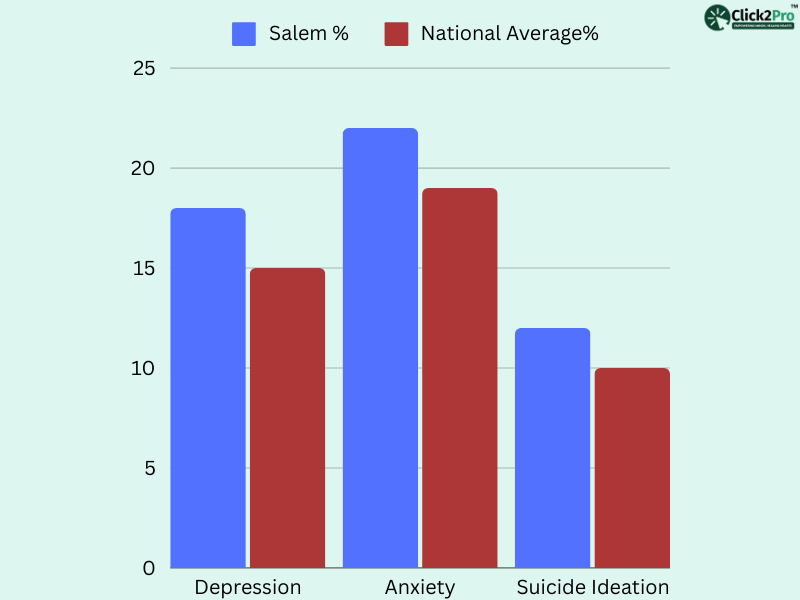
Data Snapshot: Teen Mental Health in Salem
|
Mental Health Metric |
Salem (%) |
National Average (%) |
|
Teens Experiencing Depression |
18% |
15% |
|
Anxiety Among Adolescents |
22% |
19% |
|
Suicide Ideation (Teens) |
12% |
10% |
Government Resources and NGO Initiatives
Government Programs
Manodarpan Initiative: A national initiative addressing student mental health through counselling and helplines.
Tamil Nadu Helplines: State-run helplines for mental health emergencies.
NGOs in Salem
Local NGOs provide workshops and peer support for teens dealing with identity and mental health struggles.
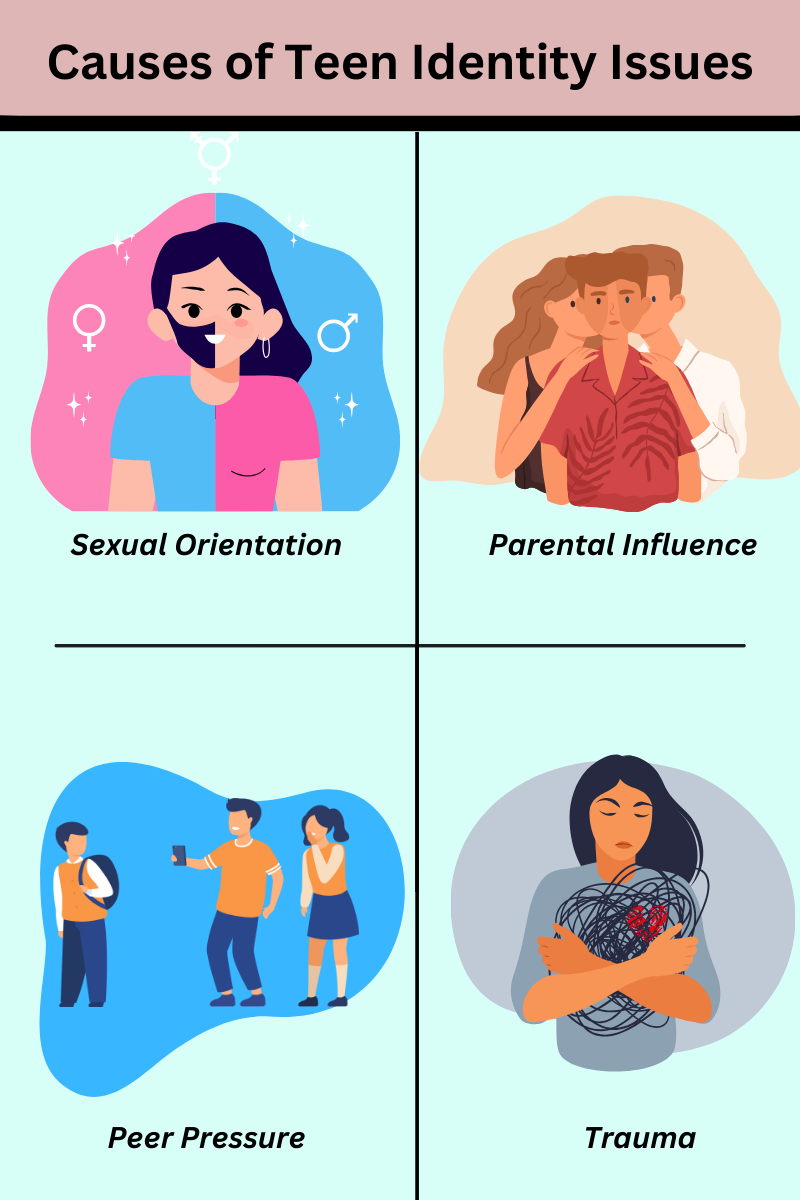
Causes of Teen Identity Issues
Hormonal and Biological Changes
Adolescence brings hormonal shifts and brain development, impacting emotions and decision-making.
Social Media and Peer Pressure
Social media fosters comparison, conformity, and cyberbullying, distorting teens' self-image and harming mental health.
Family and Parental Influence
Parental expectations, conflicts, and overprotective parenting can suppress individuality and create emotional insecurity in teens.
Gender and Sexual Orientation
Societal norms and stigma often cause stress and isolation for LGBTQ+ teens, impacting their mental health.
Trauma and Adverse Experiences
Abuse, neglect, and major life changes like divorce or relocation can disrupt teens' emotional stability and self-worth.
Research Insights and Theories
James Marcia’s Identity Status Model
Explains the four stages of identity formation: achievement, moratorium, foreclosure, and diffusion, linking unresolved identity issues to anxiety and depression.
International Studies
A UNICEF study (2022) reported that 33% of global teens experience identity-related stress, leading to mental health challenges.
WHO research highlights that teens from culturally conservative societies, like parts of India, face higher rates of identity-related anxiety.
Gender Disparities in Mental Health
-
According to the reports of USA FACTS, Between 2019 and 2021, the percentage of high school teens experiencing persistent feelings of hopelessness and sadness increased from 37% to 42%, continuing a decade-long trend of declining mental health among young people.
-
Transgender and Nonbinary Youths: These individuals face higher rates of mental health challenges, including depression and anxiety, often due to societal stigma and discrimination.
The Role of Click2Pro in Addressing Teen Identity Issues
In Salem:
Click2Pro offers culturally sensitive therapy tailored for Salem’s teens, focusing on identity-related mental health challenges. Success stories include helping teens navigate gender identity, cultural duality, and academic stress.
National Impact:
Click2Pro has provided over 10,000 teens across India with accessible online counselling, including Cognitive Behavioral Therapy (CBT) for reframing negative thought patterns.
Daily Life vs. Mental Health in Teens
|
Aspect |
Impact of Identity Issues |
Mental Health Outcome |
|
Academic Performance |
Decreased focus, procrastination |
Anxiety, low self-esteem |
|
Social Relationships |
Isolation, inability to form bonds |
Depression |
|
Family Interactions |
Conflicts over values, generational gaps |
Stress, emotional withdrawal |
Strategies for Addressing Teen Identity Issues
Parental Support
Open communication and non-judgmental discussions about identity.
Schools and Peer Networks
Incorporating mental health education and creating safe spaces.
Therapy and counselling
CBT for addressing distorted self-perception and anxiety.
Online counselling services like Click2Pro for flexibility and privacy.
Seeking a psychologist near me can provide teens with the professional support they need to navigate identity struggles effectively
FAQs
-
How do identity struggles affect mental health?
They lead to anxiety, depression, and risky behaviors due to unresolved conflicts.
-
What government resources are available for teen mental health?
Programs like Manodarpan and state helplines provide mental health support.
-
How can Click2Pro help teens with identity issues?
Click2Pro offers culturally sensitive online and in-person counselling tailored to teens’ needs.
Conclusion
Teen identity issues profoundly impact mental health, influencing anxiety, depression, and self-esteem. Addressing these challenges early is crucial, especially in culturally diverse cities like Salem. By leveraging resources like government programs, supportive family dynamics, and professional help through Click2Pro, teens can navigate identity struggles effectively and build a healthier, self-assured future.
For personalized help, consider reaching out to the best online psychologist at Click2Pro to ensure your teen receives the support they need.